
Co-washing means cleansing curly hair with conditioner instead of shampoo, and it suits Sri Lanka’s climate well because it cleanses gently without stripping the extra moisture your curls already fight to hold onto. Most curlies here can co-wash several times a week, but still need an occasional sulfate-free shampoo to clear product build-up that co-washing alone can’t fully remove.
What is co-washing?
Co-washing (short for “conditioner washing”) means cleansing your hair and scalp using a conditioner or a dedicated co-wash cream instead of a traditional shampoo. Curly hair coils from root to tip, and that shape makes it hard for natural scalp oils to travel down the length of the strand the way they do on straight hair — which is why curls often have an oilier scalp and drier ends at the same time. A 2026 dermatology review confirms the mechanism: the twisted structure of high curl pattern hair physically inhibits sebum transport down the shaft, so the scalp can be producing plenty of oil while the hair itself stays dry (see the peer-reviewed review of scalp care in high curl pattern hair). Co-washing cleans the scalp and removes light dirt and product residue without the harsher detergents in shampoo that can strip away the moisture curls need.
Why co-washing fits Sri Lanka’s climate so well
Sri Lanka’s heat and humidity mean your scalp produces oil quickly and your hair rarely gets the chance to dry out the way it might in a cooler, drier climate. Relative humidity in Colombo averages around 74% year-round and climbs higher during monsoon season, according to the Sri Lanka Department of Meteorology. That makes co-washing a natural fit:
- You sweat and produce scalp oil faster in the heat, so more frequent gentle cleansing actually helps — shampoo every single day would be too stripping, but a co-wash keeps things fresh without the harshness.
- Humidity already keeps hair hydrated, so you don’t need co-washing to “add” moisture the way someone in a dry climate might — it just needs to clean without undoing that natural hydration.
- Faster drying time in Sri Lanka’s heat means more frequent wash days are practical without the all-day drying wait that colder climates deal with.
How often should you co-wash in Sri Lanka’s heat?
Most curlies in a hot, humid climate can comfortably co-wash every day or every other day, especially if they exercise or sweat often. But co-washing alone isn’t quite enough long-term: product residue and scalp build-up accumulate gradually even with regular co-washing, and a proper sulfate-free shampoo every 2 to 4 weeks helps clear what a co-wash can’t fully shift. This lines up with the American Academy of Dermatology’s own guidance that thick, curly hair doesn’t need washing daily or even weekly, but should still be washed at minimum every 2 to 3 weeks for scalp health (see the AAD’s curly hair care guidance).
A simple rhythm that works well here: co-wash 3 to 5 times a week, and use a gentle sulfate-free clarifying shampoo roughly once every 2 to 4 weeks depending on how much product you use and how much you sweat. If your curls run tighter — 3C to 4C — you’ll likely lean toward the more frequent end of that range; our 4A curls in humidity guide covers this specifically.
What to look for in a co-wash product
Not every product labelled “co-wash” or “sulfate-free” is automatically gentle. A few things worth checking on the label:
- Watch for “sul-fake” ingredients. Some co-wash products still contain mild detergents such as sodium lauroyl isoethionate or disodium laureth sulfosuccinate — these aren’t harsh sulfates, but they are still cleansing agents, so don’t assume “sulfate-free” always means “detergent-free.”
- Avoid silicones. The same non-water-soluble silicones that cause build-up in styling products can also show up in co-wash formulas, and they work against the whole point of a gentle cleanse. See our guide on silicone-free vs paraben-free for more on why this matters.
- Look for genuine slip and hydration — aloe vera, glycerin, and lightweight botanical oils help the product detangle as it cleanses, which is most of the benefit of co-washing in the first place.
A simple co-wash routine for Sri Lankan curls
- Soak your hair thoroughly with water — curly hair needs to be fully saturated for a co-wash to distribute evenly.
- Apply a generous amount of your co-wash product to the scalp and massage gently with your fingertips (not nails) to lift dirt and light oil.
- Work the remaining product through the lengths and ends as you finger-detangle, using the slip of the conditioner to ease out knots.
- Rinse thoroughly — partial rinsing is one of the most common causes of residue build-up in humid climates.
- Follow with your styling routine: the Lasting Defining Cream on soaking-wet hair, then the flaxseed-based Lasting Curl Gel to lock in definition.
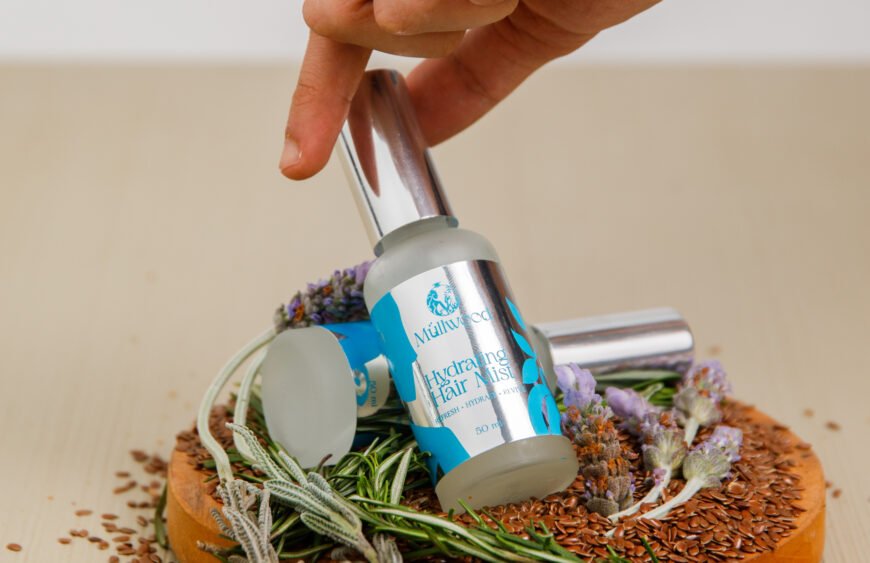
A note of honesty: Müllwood doesn’t currently make a dedicated co-wash cleanser, so for the cleansing step itself you’ll need a separate sulfate-free conditioner or co-wash product. Where Müllwood fits in is right after — the Defining Cream and Curl Gel are exactly the kind of lightweight, silicone-free styling products that pair well with a co-wash routine, and the Hydrating Hair Mist is ideal for refreshing curls on the days between co-washes. See our full roundup of the best curly hair products in Sri Lanka for how these fit alongside everything else in a complete routine. For step-by-step routines built around specific curl types, see our 3B routine guide or 4A curls in humidity guide.
Signs co-washing isn’t working for you
Co-washing doesn’t suit everyone equally. Watch for these signs that you need to lean more on shampoo:
- Hair feels increasingly greasy or flat, even shortly after washing — a sign of product or oil build-up that co-washing alone isn’t clearing.
- Scalp feels itchy or looks flaky — co-washing may not be cleansing thoroughly enough for your scalp’s needs, and a gentle clarifying shampoo more often may help.
- Curls lose definition faster than usual — residue sitting on the strand can prevent styling products from working properly.
If any of these show up consistently, shift the balance towards shampooing more often rather than forcing co-washing to work. For the full routine this fits into, see our Curly Girl Method guide for Sri Lanka.
Frequently asked questions
Can I co-wash every day in Sri Lanka’s heat?
Yes, many curlies do, especially if they sweat a lot or exercise daily. Just make sure you’re still using a proper clarifying shampoo every 2 to 4 weeks to prevent build-up that daily co-washing can’t fully remove.
Is co-washing enough on its own, with no shampoo at all?
For most people, no. Regular conditioner isn’t formulated to cleanse thoroughly, and even dedicated co-wash products can leave gradual residue. An occasional sulfate-free shampoo keeps your scalp and strands genuinely clean.
Can I use a regular conditioner to co-wash instead of a dedicated product?
You can, but a dedicated co-wash product is designed to cleanse as well as condition. A regular conditioner mostly moisturises and detangles — it won’t remove oil and product build-up as effectively.
Does co-washing work for all curl types?
Yes, though tighter curl types (3C–4C) tend to benefit the most, since they’re typically driest and most sensitive to the stripping effect of regular shampoo. Looser waves may need shampoo slightly more often to avoid feeling weighed down. See our curl types 2A–4C guide for type-by-type product guidance.




Type 3B Curls: Full Routine Guide - Müllwood
August 10, 2026 at 8:38 am[…] hair, since 3B lengths are already running drier than the scalp. If you co-wash regularly, our co-washing guide for Sri Lanka’s climate covers how often to still work in a proper clarifying […]